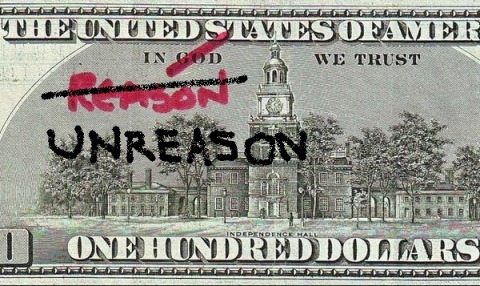
Why doesn’t the social witness of the Church have more influence than it does? With respect, I suggest that perhaps one reason is that sometimes those who represent the Church speak as though they don’t believe her social doctrine.

Why doesn’t the social witness of the Church have more influence than it does? With respect, I suggest that perhaps one reason is that sometimes those who represent the Church speak as though they don’t believe her social doctrine.

Sorry, no new post until next week. In the meantime, some readers might enjoy perusing old posts in the castle archives.


What did Macbeth say say when he saw Birnam Wood advancing on Dunsinane?
“Cheese it! The copse!”

People of my age often say "Kids are so much smarter these days than we were. They know so many things that we didn’t."
They do know more “things,” just because they have the new media. But that sort of knowledge is all breadth, with no depth.
Imagine trying to see one thing closely with lights strobing and flashbulbs popping in every square inch of the visual field.


I don’t think much of David Hume’s philosophy, but he was an astute observer of government. If he was right in his famous 1742 essay “That Politics May Be Reduced to a Science,” then the prospects of applying the sort of science he had in mind to our own country should be rather dimmer now than formerly.


In a conversation with one of the Athenian bully boys, Socrates suggested that what makes statesmen great is not whether they are good or bad at doing things and at giving the people what they want -- but whether, by their conduct and rhetoric, they leave the people better or worse than they found them.