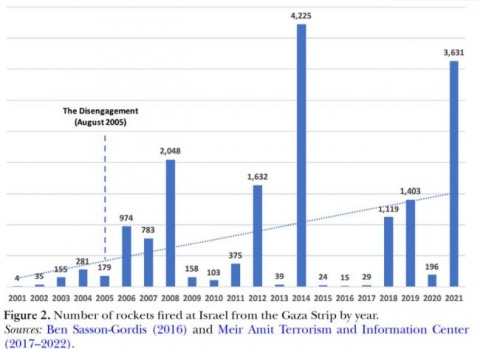
I’ve been reading the reports of discussions at the several sessions of the consistory of cardinals. Several topics were addressed, but friends of clear thinking will be disappointed by the fuzziness of many of the statements made about the justice of war, both during the discussions and afterward, both in the abstract and in application to Israel’s actions in Gaza.
One fuzzy blur lies in the criterion of “proportionate self-defense.” In just war doctrine, the meaning of proportionality used to be pretty clear: That the harms expected from the use of force must not exceed the good to be expected from it, including the prevention of harms. But many now seem to think it means that the harms expected from one's own use of force must not exceed the harms caused just by the aggressor's most recent use of force. Notice that the former understanding justifies Israel in wiping out the ability of Hamas to wage continual terror. The latter, however, would justify only a single raid, causing no more damage and loss of life than Hamas did on October 7. For decades, Hamas has been lobbing missiles at civilian areas in Israel every day. Take a long look at the chart at the top of the post. Remember the children and innocents whom these missiles are targeting.
The second blur concerns the idea of building a “civilization of love.” Christians can and should love their enemies, but a civilization of love implies that there aren’t any more enemies. Such a delusion isn’t the Gospel, but a utopian heresy. Civilization depends primarily on justice. Christians can practice love even in an unredeemed world, but since love is an infused virtue, love can become a civilizational principle only if the world is redeemed. The notion of love as a civilizational principle blurs the distinction between the kingdom of heaven and the kingdoms of this earth.
A third blur lies in the complaint that the use of force against an enemy “does not advance the gospel.” The purpose of just war is not to advance the gospel, but to achieve justice. No understanding of love which denies justice can be sound; no such understanding can advance the gospel. And suppose we did accept the premise that the use force conflicts with the gospel. Should we then say that police may not use force against criminals who rob, rape, and murder, because that does not advance the gospel either?
A fourth blur concerns the principle of discrimination, which forbids deliberately targeting noncombatants. Cardinal Fernández has emphasized that “the destruction of entire cities cannot be considered a proportionate defensive action.” He is right that one must not intend the destruction of cities, and reasonable people can argue about whether Israel has been careful enough in applying the discrimination principle, but no critic should pretend that Israel’s aim is to destroy cities per se. Its aim is to destroy Hamas. The difficulty lies in the fact that the terrorists deliberately base themselves in the midst of cities, even in hospitals and schools. It is like fighting soldiers who have strapped babies to their tanks, or implanted rocket launchers on the roofs of orphanages. Israel even announces ahead of time where civilians will be in danger and where they should go to be safe, but Hamas does not allow the civilians to go to safe zones. If the terrorists themselves have made it impossible to eliminate harm to innocents, should the terrorists be allowed to do as they please? And let us remember the attitude of Hamas itself toward harm. They have no interest in minimizing harm to innocents. For them, it is a matter of policy to deliberately bring about harm to innocents, not only on the other side, but even among their own people. That is how terrorism works. Its strategy is to make observers view defenders as terrorists, and terrorists as defenders. As we see from Cardinal Fernández’s remarks, this strategy works disturbingly well.
The final blur is the idea that in Israel’s efforts to put an end to the power of Hamas to commit everyday atrocity, we are witnessing a “normalization of war” and a “disturbing rehabilitation of war as an instrument of international policy,” accompanied by a serious “loss of historical memory.” In reply, allow me to make just three brief points.
By way of correction: Just war theory does not “normalize war.” This is bumper-sticker thinking. What just war theory tries to normalize is restrictions on war. Of course even the best principles can be twisted, but Israel seems to be doing the best it can against a malicious, dishonest, and unscrupulous enemy.
By way of inquiry: What else could war be but an “instrument of international policy”? The question is whether the instrument will be used to destroy the possibility of a just peace, as Hamas wages war, or used, in the last resort, to remove the obstacles to a just peace, as Israel tries to.
By way of suggestion: I daresay that the Jewish people have an excellent historical memory. In particular, they remember the Holocaust very well. That is why Israel exists. That is why Jews everywhere say “never again.”
Pray for the peace of Jerusalem!
May they prosper who love you!
Peace be within your walls,
and security within your towers!
-- Psalm 122:7-8 (RSV-CE)