I am never surprised by misunderstandings of the natural laws of sexuality and marriage. When I first began to study natural law, some of them puzzled me too.
Here’s a question I get all the time. We say that marriage has two natural purposes. One of them is procreative: Turning the wheel of the generations. The other is unitive: Bonding the two procreative partners. Neither purpose may ever be dishonored. Nonmarital intercourse destroys both goods. Inside the marital bond, they are protected.
But does the procreative purpose imply that marital intercourse is wrong unless the husband and wife are at that moment trying to make babies? Is it wrong for them simply to take pleasure in each other?
The answer is no, of course it isn’t. But why? My discussion follows Thomas Aquinas (what a surprise!), and if you want all the details, you can read them here.
The key point is that sexual intercourse is wrong if it is not rightly related to its procreative purpose, but there is a difference between saying that it must be rightly related to procreation, and saying that the motive must always be procreation. How so? We can understand the matter better by comparing temperance in sex with temperance in food.
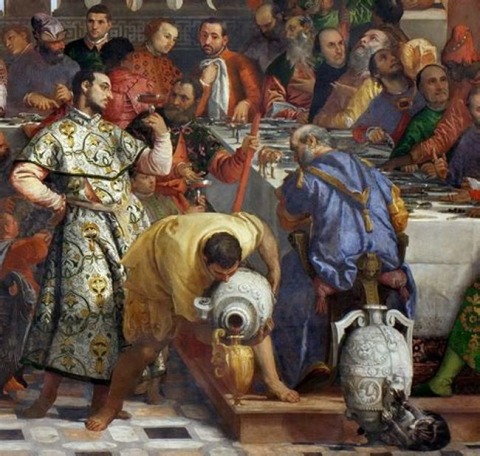
We eat because food is necessary. However, necessity can mean two different things. In the first sense, food is necessary because we require it for life and health. In this sense, food is necessary to all animals. But, in the second sense, St. Thomas suggests, food is necessary because without it we cannot live becomingly. The beasts know nothing of this, but we rational animals do. The reason we eat and drink more on festive occasions than at other times is not simply to live and be healthy, but to live becomingly. Obviously, God endorses this motive; after all, at the wedding feast in Cana, Jesus turned water into wine.
Even at feasts, eating and drinking must still be rightly ordered to life and health, but right order does not require that we eat and drink just for life and health. Rather, it allows us to enjoy the blessings of food and drink “so long as they are not prejudicial” to life and health. It would of course be prejudicial to life and health if we ate as much as we could and then purged so that we could eat still more, but it is not prejudicial to life and health to toast the married couple with wine, merely because the wine is not necessary to nutrition.
The distinction between the two senses of necessity applies to sexual intercourse too. Remember that the husband and wife are joined in a procreative partnership. In the first sense of necessity, then, sexual intercourse is necessary simply so that they may be fruitful. In this sense, sexual intercourse is necessary to all animals. But in the second sense, St. Thomas suggests, sexual intercourse is necessary so that the husband and wife may enjoy their procreative partnership becomingly, so that they may celebrate it. They take “exuberant joy” in all aspects of their union, as only rational beings can.
Even celebratory intercourse must still be rightly ordered to procreation, but right order does not require that the spouses enjoy intercourse just for making babies. Rather, it allows them to enjoy intercourse so long as they do nothing in intercourse to thwart the procreative possibility of their action. For example, just as they may fast from food for a time, so they may fast from sexual intercourse for a time. However, just as they may not insult the nutritive order of their bodies by deliberately purging during meals, so they may not violate the procreative order of their bodies by deliberately depriving coition of its fertility.
By clearing up the two senses of necessity, we clear up another point too. What does St. Thomas mean using the Pauline language of requesting the “payment” of the “marriage debt”? It means just this: That one spouse proposes sexual intercourse to the other, perhaps just for the enjoyment of their union. Yes, they must always honor, and never thwart, the procreative possibility of the act, for after all, their union is a procreative partnership. Yet, procreation need not be their motive at moment of joining. It’s fun.
By the way, the payment of the marriage debt is not an aspect of the husband’s authority. Indeed, St. Thomas insists that in proposing sexual intercourse, the husband and wife are utterly equal; either may propose intercourse to the other. Neither does proposing it mean disregarding the feelings or well-being of the other spouse; he always reminds husbands to be considerate to their wives.
Why on earth then does St. Thomas use the language of a “debt” at all? For that matter, why does St. Paul? If to us, this language seems to diminish the loving unity of marriage, reducing intercourse to a cold transaction, we are missing the point. The point is to emphasize its loving unity and deny that it is a cold transaction. For do we really believe that the husband and wife become one? Do we really believe that in marriage, they give themselves to each other? Then we must believe that they are not coldly separate, autonomous beings, who merely happen to have worked out an arrangement of convenience. With respect to the joining of their bodies, they are one. Just because they really are united, each spouse owes it to the other to act as though they are united. This is a real duty, a real owing, a real debt. To force oneself upon one’s spouse is wrong -- but so is withholding intercourse out of spite or indifference.
From this point of view, the mutual debt which the spouses owe to each other is like the duty of loving care which each person owes to himself, a point which St. Paul also emphasizes when he says, “Even so husbands should love their wives as their own bodies. He who loves his wife loves himself.” St. Thomas comments on this verse, “Just as a man sins against nature in hating himself, so does he who hates his wife.” They should be enjoying each other.
Actually, not only is marital intercourse fun, but it is more fun than nonmarital intercourse. But that’s a topic for another day.