The Church believes that because Holy Scripture is inspired by God, its authentic teachings cannot contain any real contradictions. It follows that apparent contradictions have to be harmonized. This interpretive principle is called Continuity.
For example, we are commanded to honor our parents and love our neighbors, yet in Luke 14, Jesus says, “If any one comes to me and does not hate his own father and mother and wife and children and brothers and sisters, yes, and even his own life, he cannot be my disciple.” If we took this statement in the literal sense, we would think that He was retracting the commands of love and honor. But no, we have to look deeper. The most reasonable interpretation, which preserves the continuity among all of these statements, is that Jesus was using the figure of speech called “hyperbole,” exaggeration to make a point.
Hyperbole is common in Scripture. For example, in Matthew 7, He asks “How can you say to your brother, ‘Let me take the speck out of your eye,’ when there is the log in your own eye?" The point is not that there may be a literal log in someone’s eye, but that we must not condemn small faults in others while ignoring great faults in ourselves. In the same way, the point of the Luke 14 passage isn’t that we should literally hate ourselves and all those most dear to us, but that we should hold Him more important even than they. Our love for Him must burn so brightly that for Him, we are willing to give up even them.
We follow the same principle of Continuity when we read the documents and teachings of the Church herself, because we believe the Church too is guided by the Holy Spirit. Thus, no statement which contradicts Scripture, Sacred Tradition, or the Magisterium would have authority, even if it came from a bishop, a cardinal, or a pope who said he was speaking for the Church. Yet on the other hand, the principle of Continuity bids us to be reluctant to conclude that the prelate did intend to contradict it. Instead we should try to construe the meaning of his statement in such a way that it harmonizes with what the Church has always taught.
Prelates don’t always make this easy. Pope Francis was notoriously reckless in his manner of expression. Time and again he seemed to contradict Scripture, Tradition and the Magisterium. This brought about an enormous amount of confusion and scandal.
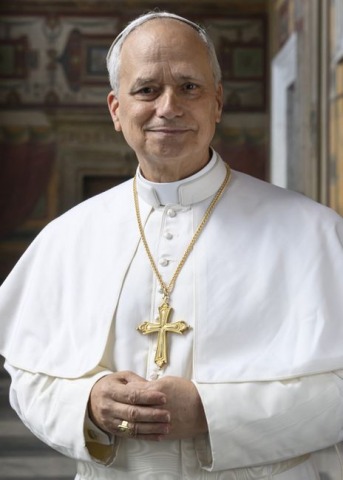
Now the Church herself teaches that popes can be mistaken, that very little of what they say is to be considered infallible, and that for a Catholic to criticize his pope respectfully is neither sinful, unfaithful, nor disobedient. I intend the greatest respect when I says that although, so far, Pope Leo has been more careful than Francis, one could wish he were much more so. Many of us have been hoping that Pope Leo XIV would soon clean up the mess. Not yet.
Case in point: Some of Leo’s statements on war, chief among them in his recent encyclical, Magnifica Humanitas, “Magnificent Humanity.” The encyclical is mainly about artificial intelligence, not war, and on the topic of artificial intelligence it says many good things. Apart from Leo’s very necessary condemnation of AI-guided weapons and targeting systems which function autonomously, I am not sure why he strays onto the topic of war at all. Yet his encyclical on AI says quite a lot about war, and many of its statements on that subject are vague, careless, and misleading. One has to work hard to interpret them in line with the principle of Continuity.
For this reason, I don’t think I can say confidently what the Pope does mean by them. But I can try to explain what I hope he means by them.
“Today, more than ever, without prejudice to the right to self-defense in the strictest sense, it is important to reaffirm that the ‘just war’ theory, which has all too often been used to justify any kind of war, is now outdated.” Phil Lawler of Catholic Culture remarks, “Now if Pope Leo had suggested that just-war theory needs to be updated, I could wholeheartedly agree. In Magnifica Humanitas he outlines some of the reasons why the just-war tradition must be brought into line with 21st-century realities.” This is a fair statement. Unfortunately, “updated” is not the word Pope Leo used. He said it was outdated, which, taken literally, means that it should be discarded, that it should be junked, that we should start over from the beginning.
The pope simply cannot have meant that literally. The just-war doctrine, which is part of Sacred Tradition, has articulated a number of conditions which must be satisfied in warfare, first in order to go to war at all, second in the conduct of the war. Could the pope possibly have meant that all of these conditions should be junked? Answer: No, because he appeals to several of them himself.
For example, when he affirms “the right to self-defense in the strictest sense,” he is appealing to just-war doctrine’s criterion of Just Cause, in which self-defense is included. And when, at another point, he emphasizes that “target selection and the use of force must not confuse combatants and non-combatants, nor ignore the impact on defenseless populations,” he is appealing to the just-war principle of Discrimination.
I would like to believe that what the pope really intends is not to junk these criteria, but to sharpen them. But then he should say so. Rather than restating them more precisely, he speaks with a strange combination of cloudiness and vigor.
Here is another example of that cloudiness. The pope offers the fact that just-war theory has “all too often been used to justify any kind of war” as a reason for thinking that it is outdated. He is absolutely right that just-war doctrine has often been abused, but there are two points to be made here. The first point is that although poorly stated truths are especially susceptible to abuse, the mere fact that a doctrine is abused is not in itself a sign that it is false or poorly stated.
In fact, the more true and important a doctrine is, the greater a temptation it presents to those who would tell lies in its name. For example, consider the biblical exhortation, “Justice, justice, you shall do.” Every unjust regime presents itself as just, defending its injustices as though they were demanded by justice itself. Does this fact refute the exhortation to justice? Obviously not: What it demands is that the principle of justice be clarified.
For an even more telling example, antinomians abuse the Gospel itself, claiming that because of the grace of Christ, we are exempt from the moral law. God, preserve us from ever concluding from these abuses that the gospel of grace is outdated!
And so the term “just-war theory” must not be used as a synonym for the abuses of just-war theory. Thinkers who work to sharpen and clarify its principles and insights should be encouraged, not discouraged with loose talk of their work being “outdated.”
The second point to be made is that throughout the history of just-war tradition, the theory continually has been sharpened and clarified, with the aim of helping it resist its own abuse. This is simply what just-war thinkers do. Pope Leo’s encyclical says about war, “It is not enough to invoke a generic type of ethics. Concrete criteria for discernment must be established.” Could he possibly have meant that the just-war tradition is a “generic type of ethics”? It is precisely a set of “concrete criteria for discernment.” I would like to think Pope Leo meant to say that this great project of development and sharpening should be continued. But then why didn’t he say so, instead of speaking of the doctrine as though it were static and calling it outdated?
The pope, like his predecessor, seems to believe that the increase in the destructiveness of modern weapons and methods of warfare makes it crucial that we be more reluctant to go to war than we might have been in pre-atomic days. Often, yes, but doesn’t this require discernment? For example, what about the case in which the purpose of a preventive attack is to prevent an irresponsible nation from using atomic weapons? In such a case, shouldn’t we be less reluctant to go to war than in pre-atomic days? It no more promotes international peace to allow rogue states with bombs to run amuck than it promotes the peace of neighborhoods to let criminals with bombs run amuck.
Or take this remark: “Weapons can and must be silenced, for they do not resolve problems but only increase them.” This is simply false, because the measured application of violence does solve some problems. If a terrorist or molester is trying to abduct a child, he must be stopped, even if the only way to stop him is to shoot him. I call that a solution. Or consider World War II. Without in any way condoning the deliberate targeting of innocents and noncombatants – something unfortunately practiced by both sides in that war – still, weren’t weapons necessary to put a stop to Nazi Germany?
Granted, the destruction of the Nazi state did not “solve the problem” of hatred for Jews, which has resurfaced in our own time. But it certainly “solved the problem” of the Holocaust. I cannot believe that Pope Leo would think that Allied troops were wrong to use force to liberate the death camps, but his language and citations could give this impression.
Repeating words he expressed at the start of his pontificate, he writes, “‘The peoples of our world desire peace, and to their leaders I appeal with all my heart: Let us meet, let us talk, let us negotiate!” Here the pope fails to distinguish between first resort and last resort. Of course we should hope for a just peace negotiated in good faith. We should first attempt diplomacy, not blazing guns. But there often comes a time when it becomes clear that though one side believes in good-faith negotiation, the other side doesn’t. In fact, it is all too common for a belligerent to drag out negotiation only as a guise for preparing yet more extreme violence. Does the pope mean that the criterion of Last Resort should be abandoned, that there is never a Last Resort, that one must negotiate on and on, long past the reasonable hope of a just resolution short of war? I hope that is not what he means. But he speaks as though it is.
The pope warns, “Our neighbors are not first our enemies, but our fellow human beings; not criminals to be hated, but other men and women with whom we can speak. Let us reject the Manichean notions so typical of that mindset of violence that divides the world into those who are good and those who are evil.” Just so! Even when we do come to that last resort, we must come to it with sorrow and regret, and even the war must be conducted in such a way that it does not preclude eventual reconciliation. But we must be equally careful to reject the naïve view that every human being, and every political regime, is at the same point of mixed good and evil.
“The peoples of our world desire peace,” Leo says. Yes, most do. But not all do, and certainly not all of their leaders do. Chancellor Hitler did not desire peace with the Jews; he sought their annihilation. The terrorists and followers of Hamas do not seek coexistence with Israel; they seek its extermination, right down to the last man, woman, and child. People who desire peace do not gas their victims. They do not rape them. They do not drive nails into their groins.
We must never forget that at times, all of us resist God’s love. But neither dare we forget that some of us resist it more vigorously than others. Some, in fact, reject it utterly. To overlook these facts is to deny the reality of sin.
Saint Augustine, the patron of the pope’s Augustinian order, knew this. As he wrote, the purpose of just war itself is not hatred and conquest, but tranquillitas ordinis, rightly ordered peace. I believe the pope knows this too. I hope he does. But I wish he would say so clearly.
The merciful God is also the Just Judge. Divine love and wisdom are not vague, fluffy clouds, but precise and powerful. Our speech and reasoning about them must be equally so.
NEW STUFF
I previously passed on the information about Andrew McDiarmid’s two-part video interview about Pandemic of Lunacy. Both parts are posted to the Listen to Talks page. However, he also did a second two-part interview with me, this one print: Coincidentally, the focus of the print interview was artificial intelligence, which was the primary subject of the Pope’s encyclical.
Last week I passed on the link to Part 1 of the print interview (for reference, it’s right below), and now I can pass on the link to Part 2 (also below). These are at Mr. McDiarmid’s Substack, “The Human Adventure.”
“AI, Education, and the Collapse of Thinking”: https://thehumanadventure.substack.com/p/ai-education-and-the-collapse-of
“How to Think Clearly in the Age of AI”: https://thehumanadventure.substack.com/p/how-to-think-clearly-in-the-age-of
Since I usually post only on Monday, perhaps I should also mention that on Thursday I posted the following link to Mark Bauerlein’s First Things interview with me, on the Conversations podcast:
“How the World Went Insane”: https://firstthings.com/how-the-world-went-insane-ft-j-budziszewski/