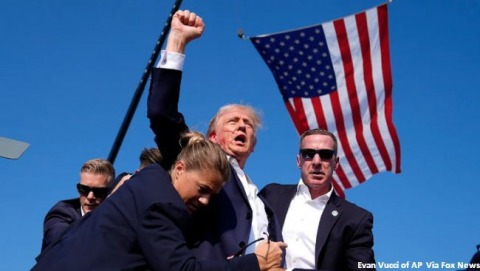
I had been more than half-expecting at least one attempt on Mr. Trump’s life, but I would have greatly preferred to be wrong. My first reaction to the shooting has been sorrow. My second has been prayer.
I had been more than half-expecting at least one attempt on Mr. Trump’s life, but I would have greatly preferred to be wrong. My first reaction to the shooting has been sorrow. My second has been prayer.

Whenever a moral issue is raised, the reflex of many people is to spout, “Who is to say what is right or wrong?”
This is the wrong question. The right question isn’t “Who is to say?” but “How can we find out?”
The former question takes for granted that there is no way to find out. This ignores centuries upon centuries of moral inquiry.

Pro-abortion people often say the unborn baby can’t be protected just because we don’t know he is a baby. Who is to say?
But in the first place, we do know that he is a baby. He is an immature member of the same species as ourselves, possessing all the potentiality for further development that a born baby has.

Publisher: Cambridge University Press. Expected publication date: October 2024
Subjects: Philosophy of Religion, Ethics, Religion, Philosophy

In view of the furor about legal and illegal immigration, it’s interesting to see what Thomas Aquinas has to say about how the law of the Old Testament treated such matters.
Abortion is not just one issue among others, like capital gains taxes, tariffs, or reducing automobile emissions. It’s like a snag in a woven sweater. Because a snag is just the protruding loop of a strand which runs all the way through the weave, if you keep pulling on it the whole sweater comes unraveled, and you’re left holding a tangle of loose yarn.

“Question assumptions.” Sure, but which ones? Today's culture is often called skeptical, but about some things it’s not nearly skeptical enough. It questions assumptions which don’t need to be questioned, and swallows assumptions which really ought to be.