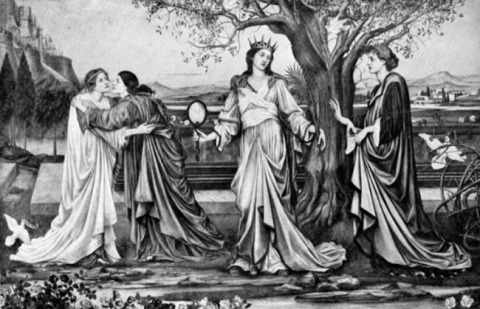


“We are very apt to wish we had been born in the days of Christ, and in this way we excuse our misconduct, when conscience reproaches us. We say, that had we had the advantage of being with Christ, we should have had stronger motives, stronger restraints against sin.

It sounds like an idea for a motion picture, doesn’t it? A historical melodrama. You could call it The Last Days of the Republic.

Sexual harassment is a filthy offense. However, it is impossible to restrain unless we acknowledge a standard of sexual morality.

Some thinkers who believe in natural law are uneasy with the language of natural rights. The reasons for this disquiet are understandable. Why? Because however firmly rights may be grounded in what is objectively just, grammatically speaking my rights seem to be subjective, just in the sense that they are “mine.”

A student in one of my classes insisted one day that when Thomas Aquinas spoke of Divine law, he means “one’s own Divine law”: Torah for Jews, the Gospel for Christians, Shari’a for Muslims, Thelema for Wiccans, Sheilaism for Sheila, whatever it may be. She was quite offended by the suggestion that this was not what St. Thomas had in mind.


A movement sometimes styled “evolutionary ethics” or “evolutionary psychology” takes as its goal the provision of a naturalistic basis for moral judgments. This new naturalist fashion comes in several overlapping varieties. Let us consider the two best-known.


I enjoyed your recent blog post on good libertarianism, as opposed to the sort of libertarianism which sees liberties as indeterminate so that its advocates can do as they please.