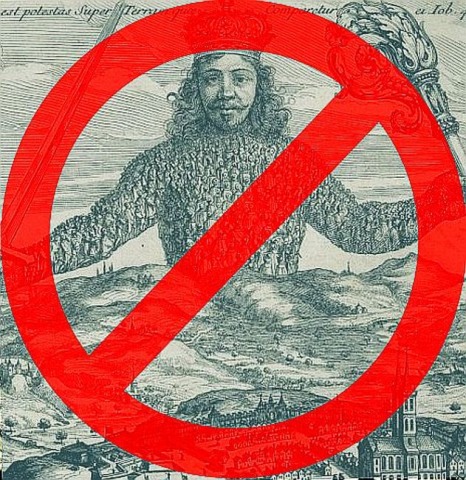


A generation ago, the New Left followers of Herbert Marcuse preached the theory of “repressive tolerance,” which meant that tolerating the free expression of all opinions is repressive, because it hinders the triumph of the good ones. Like socialism.

I am relatively new to Thomism and find your blog posts helpful, but I have a question. Does our knowledge of the natural law begin with sense data? Is the natural law a sensible thing? If so, by which sense? St. Paul states that the natural law is written on the human heart.


The classical natural law tradition holds that there really are such things as exceptionless moral precepts, rules that must never be broken, lines of conduct that can never be placed in right order to the ultimate and final good.

"Addiction Can Happen to Anyone"

A hundred thousand grains of sand is a heap. If you take away one grain, it is still a heap. If you take away another, it is still a heap. Skip ahead. If you take away all grains but one, the one remaining grain is not a heap. When did the collection stop being a heap?

There really are exceptionless rules, but we lose a lot focusing on rules to the exclusion of the corresponding virtues.
Consider two different acts: Murdering and desecrating the body; murdering and eating the body.

Can someone pray if he doesn’t believe in God? I don’t see why not.
In trouble, I might scream “Help!” even if I don’t think anyone can hear me, just on the chance that someone can. In the same way, I might cry “God, I need you. I don’t think you are there, but if you are, I will try to do what you ask. Please get me out of this dark.”

Common sense urges that the easier it is to commit crime and the harder it is to detect it, the more crime will be committed. Against common sense, the “fact-checkers” are out in force, chanting in unison that very little fraud is associated with mail-in voting.
How would we know? The same things that make such fraud easy to commit also make it difficult to discover.